Page 1 of 1

Chicago 1893

PostPosted: Wed Aug 15, 2012 10:23 am
by JoeF
Proceedings of the International Conference on Aerial Navigation, held in Chicago, August 1, 2, 3 and 4, 1893.

Octave Chanute carefully tried to keep the conference at a high-qualification level and stepped to keep "cranks" distanced.

One of my hopes is that every "crank" will have a platform; let each researcher have opportunity to sift the values of any offering. The 1893 proceedings is a monumental result of importance to early aviation and to hang gliding. However, I ache for what was kept at a distance!

Google has made available a full copy of the proceedings. I have yet to mine the document for its full say that may affect hang gliding both in hang gliding's gliding-kite format and in hang gliding's non-kite glider format.

This thread topic is suggested as one platform for studying the proceedings with the aim to advancing historical hang gliding understanding. From time to time, maybe find a gem in the proceedings and comment.
Re: Chicago 1893

PostPosted: Thu Aug 23, 2012 7:27 pm
by simajim
Hello, Joe:
You compiled an interesting selection of people and events as part of your hang gliding history, but you do not seem to discuss data prior to 1900.
There are many newspaper articles etc on Lamson and his gliders, even how he towed his gliders over the roads to the take off-site in the mid 1890s.
You ask which papers were not accepted (or "trash" in Chanute's opinion) for the 1893 Int'l Conference, that is easy, just check the letter books of Zahm and Chanute. All (?) correspondence is copied there.
Zahm wrote many good articles prior to 1902, he even coined the word "Naval Soaring" that we would consider today as "ridge soaring"
James Means is another interesting and influential person who self-published many pamphlets in the early/mid 1890s. It is my understanding that the Means family still owns quite a few copies of the Epitome, Annuals, Manflight, etc. The Epitome from 1910 is the book on soaring. This should be mentioned here!
The information on Herring can be found in Chanute's letterpress books as well as in Herring's article in the American Engineer. His third Lilienthal-glider was rebuilt and made stronger to be flown in June 1896 in Chicago. The Chanute and Herring relationship is discussed in detail in my book, Chanute's biography: "Locomotive to Aeromotive". Herring was a controversial person.
But I miss several other people who contributed in the early days of developing manflight when no engine was available. These men should be considered precursors of the hang gliding development as well. Only to mention a few Americans: Albert Merrill, Spratt, Huffaker, Bion Arnold, A G Bell, and many more. They all discuss soaring, or how to extract power from nature, and each of them contributed in their own way.
Hope this helps,
Simine

Re: Chicago 1893

PostPosted: Sun Aug 26, 2012 10:57 am
by JoeF
simajim wrote: ...
Hope this helps,
Simine


Yes, it does. The incomplete project is aiming at robustness!

Springboarding from your post, Simine, so far:

[*] http://groups.yahoo.com/group/KiteBooks/message/6
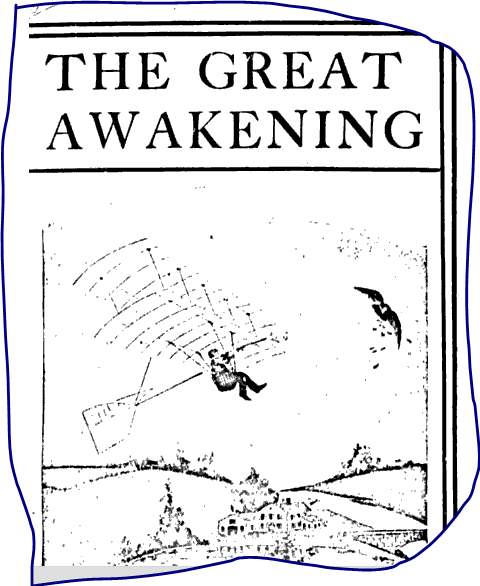
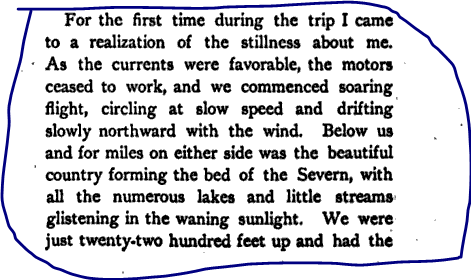
[*] http://books.google.com/books?id=OF09rS6IenUC&pg=PP1#v=onepage&q&f=false The Great Awakening by Albert Adams Merrill.
http://www.energykitesystems.net/USHawk ... kening.gif
Image
Image
[*] http://www.energykitesystems.net/USHawks/HUSH.html This is a start. Anyone interested may post ... and I will expand the reference.
Thanks,
JoeF

Re: Chicago 1893

PostPosted: Mon Aug 27, 2012 12:16 pm
by Free
Merrill's "The Great Awakening" book starts out as fiat money promotion before the "Creature From Jekyll Island," private 'Federal' Reserve bank was instituted by crooked vote in 1913.
http://www.amazon.com/The-Creature-Jekyll-Island-Federal/dp/0912986212

Guide to the Albert Adams Merrill Papers, 1892-1951
http://cdn.calisphere.org/data/13030/jx/tf3g5002jx/files/tf3g5002jx.pdf

Albert A. Merrill was an aviation pioneer and designer. He was born on October 23, 1874 in Hyde Park, Massachusetts.

From 1894 to 1911 he worked for Boylston National Bank in Boston, then from 1911 to 1918, as an accountant for T. C. Edwards and Waldron Rand in Boston, finally ending up at Price Waterhouse in Los Angeles. In 1918, he joined the Throop faculty as an instructor in accounting and aeronautics. Merrill left the Caltech staff in 1930 to engage privately in airplane design, but later returned in 1940.

At Caltech, Merrill supervised the design, construction, and operation of a small wind tunnel on campus. It was the first wind tunnel on the west coast, and continued in operation until it was destroyed by fire in the 1930s. He helped to develop small subsonic wind tunnels operable by one person. A 110-foot long tunnel of this type was built at Caltech in the late 1940s and dedicated to Merrill in August, 1950.

He held several patents for airplane design. One of his earliest was for the 'up only' aileron, which provided lateral control by deflecting upward only and eliminating drag on the down aileron. Accordingly, it eliminated the need for combined use of rudder and aileron, which had been necessary for many years.

The Merrill Aircraft Company built the Stagger-Decalage biplane based on his designs, which claimed to land "safely without manipulation of controls and...will not nose dive, stall, or spin."

Throughout his lifetime Merrill was interested in flying. Upon his graduation from English High School in Boston in 1892 and 11 years before the Wright Brothers' first flight, he delivered an essay on aerial navigation. In this essay, he predicted that man would be able to fly in small ships with light, powerful engines within 10 to 15 years. In 1894, he started the Boston Aeronautical Society and was both secretary and treasurer until it disbanded in 1912. Merrill learned to fly in 1911, first at Squantum and later at the Wrights' place in Dayton. He published numerous articles on airplane design and other contemporary topics as well. Merrill died in 1952.


Re: Chicago 1893

PostPosted: Thu Mar 13, 2014 2:16 pm
by JoeF
Hi Joe,
A colleague of mine has sent some information to me on Albert A Merrill which might be of interest to you as he worked at Caltech.
1918
Albert A. Merrill (1875–1952) Instructor in Aeronautics, 1918–1930, 1940–1952. First Instructor in Aeronautics at Caltech. In 1895, the Boston Aeronautical Society was formed with Merrill, William H. Pickering, and James Means forming the executive committee. In 1911, he learned to fly, first at Squantum and later at the Wrights' place in Dayton. At Caltech, Merrill operated the first wind tunnel and complemented Bateman's theoretical instruction with wind tunnel measurement practice and airplane design. He was self-taught, holding several patents and building several airplanes, including the "Dill Pickle" with Klein and Millikan.

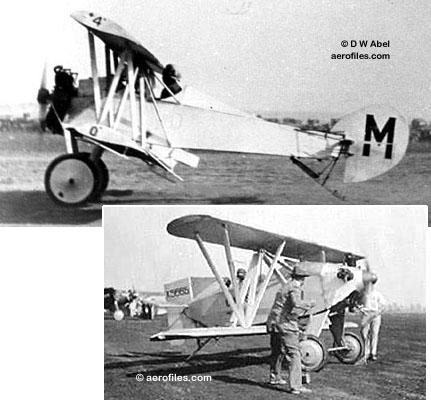
. He is not as well known as some pioneers but he worked with Gustav Whitehead:- Image

His exposure to the ideas of Chanute and others may have led him to the pitching wing patent seen here:- http://www.google.com/patents/US1355990
Image

It may be he was aware of Spratt's work on similar lines?

With regards,
Tony

===============
Much thanks, Tony [ARP] for the Merrill history leads. I have yet to delve deep into Caltech's library holdings to sift for hang gliding and kiting history. Taras Kiceniuk, Jr. is part of the Caltech scene. We will be having a deeper folder on Merrill. Best, JoeF
==== These two thumbnails from one patent are not linked; see full patent for images of high resolution.
Image
Image
=====================================================================
Airplane US 1889864 A